The Portal games have been a favorite of mine for a very long time. Valve released the first portal game in 2007 and the sequel in 2011. It's the series that I recommend to people who are interested in playing video games, but for whatever reason haven't started playing yet. They're not super long, the beginning is slow paced so there's time to grasp the controls, the characters are captivating and there's not a whole lot going on story-wise so it's easy to follow. They're also on sale constantly so buying them for three euros is not a huge investment.

the player controls a character names Chell, a mute woman, whos' forced to complete different physical tests for an AI called GLaDOS. The first game has only these two characters. GLaDOS can only be heard through voice messages from a speaker system. Most of the storytelling is done by GLaDOS's voice. Through these voice messages, it is slowly revealed that the AI that in the beginning seemed helpful is actually pretty malevolent. Eventually, when the player has completed the tests, GLaDOS decides that she's done with her test subjects and tries to murder the player character. Chell escapes and eventually defeats GLaDOS and blows up the testing facility.
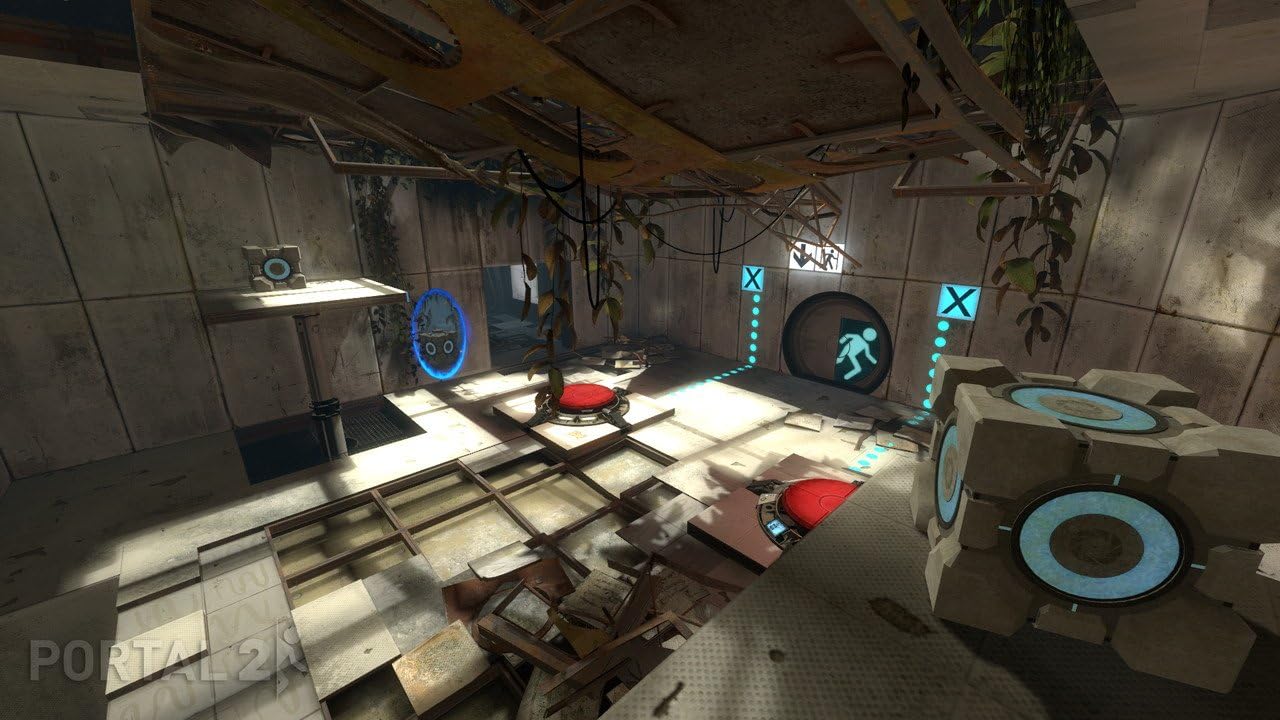
Portal 2 starts with Chell waking up from an artificial coma in the same facility years after she blew it up. The testing facility looks destroyed and overgrown after years of being unused. Chell teams up with a robot named Wheatley and they make an attempt to escape the facility, only to be stopped by GLaDOS. Hellbent on revenge GLaDOS puts Chell back to the test chambers with the intent of making her run through them until she dies. While Chell does tests Wheatley manages to find himself in a situation where he has power over the entire facility instead of GLaDOS. The power goes to his head and the rest of the game has Wheatley as the enemy, while Chell and GLaDOS team up to stop him from destroying the place. The game takes the player through old test chambers and failed experiments. The game ends when GLaDOS and Chell work together to defeat Wheatley and with GLaDOS releasing Chell from the testing facility.
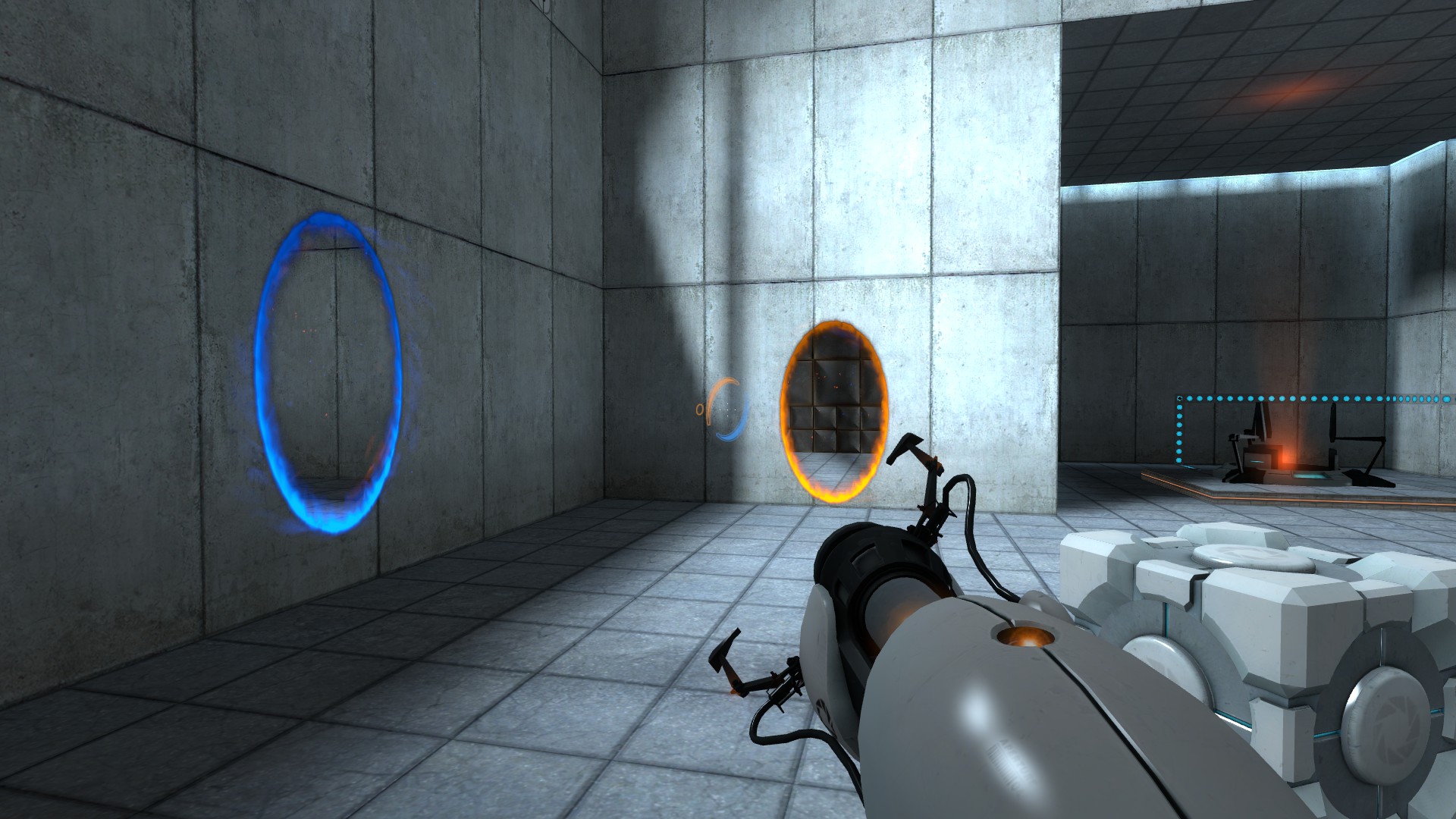
Plot
Here's the plot summarized as briefly as possible to the best of my ability, there are some spoilers so tread carefully:the player controls a character names Chell, a mute woman, whos' forced to complete different physical tests for an AI called GLaDOS. The first game has only these two characters. GLaDOS can only be heard through voice messages from a speaker system. Most of the storytelling is done by GLaDOS's voice. Through these voice messages, it is slowly revealed that the AI that in the beginning seemed helpful is actually pretty malevolent. Eventually, when the player has completed the tests, GLaDOS decides that she's done with her test subjects and tries to murder the player character. Chell escapes and eventually defeats GLaDOS and blows up the testing facility.
Portal 2 starts with Chell waking up from an artificial coma in the same facility years after she blew it up. The testing facility looks destroyed and overgrown after years of being unused. Chell teams up with a robot named Wheatley and they make an attempt to escape the facility, only to be stopped by GLaDOS. Hellbent on revenge GLaDOS puts Chell back to the test chambers with the intent of making her run through them until she dies. While Chell does tests Wheatley manages to find himself in a situation where he has power over the entire facility instead of GLaDOS. The power goes to his head and the rest of the game has Wheatley as the enemy, while Chell and GLaDOS team up to stop him from destroying the place. The game takes the player through old test chambers and failed experiments. The game ends when GLaDOS and Chell work together to defeat Wheatley and with GLaDOS releasing Chell from the testing facility.
Linearity
There's not a whole lot of decision making in the portal games. And by not a lot I mean none. They're puzzle games so there's not a lot of options given to the player, instead, you have to figure out the right solution. The games both have very linear point A to point B narratives and are very much movie-like in that sense. I was thinking about this when I read the Game Design as Narrative Architecture essay by Henry Jenkins that was assigned in the pre-task. He talks a lot about how film and other narrative forms of media differ from video games. Especially RPGs and other games with multiple storylines that differ based on the player's choices can't be strictly judged on the same criteria that we use on films and books. The Portal games, on the other hand, are could easily be compared to a movie. Both the games have very clear act structure with set up, confrontation and resolution.Time
I started to write about both games in the series because I really like the transition between them. It's unsure how much time has passed when Chell wakes up at the beginning of Portal 2. The game makes the players use their imagination. The player is simply shown the testing facilities that were previously bright white and metallic and are now falling apart and overgrown with vines and they have to put the story together based on these visual cues. It is clear that while Chell was taking an induced nap something drastic went down in the outside world. GLaDOS does offhandedly mention the outside events, but they're never explained further:"Due to events beyond our control, some testing environments may contain flood damage or ongoing tribal warfare resulting from the collapse of civilization."While the Portal games might lack in freedom of choice, they excel in allowing the player to fill in the gaps themselves. Everybody who played the game had a different view of what happened.
Great games and a good post. It's suggested in the games that the Half-Life and Portal universes are linked. They talk about Aperture Science competing with Black Mesa and such.
VastaaPoistaPortals are a magnificent series, and it's fascinating how big of an influence they became in the gaming/pop culture world (maybe one could argue that they still are, in some cases?). Especially with the build-a-level mechanic in the second game.
VastaaPoista