 |
| by http://webcomicname.com/ |
A couple of weeks ago we talked about advertising in class, more specifically about how in the case of Nike and United Colors of Benetton they took a stance on political issues in their advertisements. It's just one way that these brands are making themselves more prevalent in our lives. The conversation made me want to dig deeper into these brand identities and how they work and why they bother me so much.
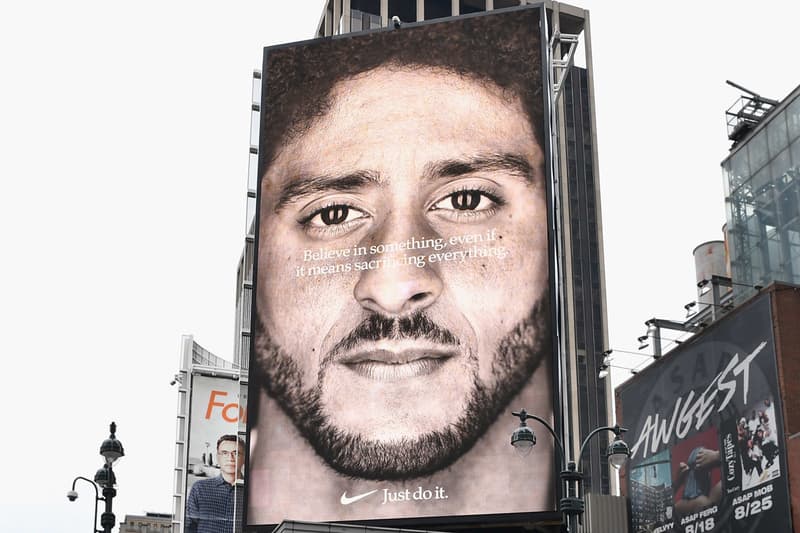
The point of brand identities is to give a certain brand a sort of persona. In the case of Nike and United Colors of Benetton, it could be said that the advertisement is done for honourable reasons: for calling attention to social issues. While that's cool and valid and all we have to remember that the goal, the bottom line, is always money. They are creating this type of "woke" socially aware image of their brand, which advertises directly to a certain demographic. According to BBC Nike's online sales grew by 31% after the Kaepernick ad campaign. Nike did receive a lot of backslash, but people also talked about the campaign everywhere. Getting people to talk about your brand is an incredibly effective way to advertise, take it from me, a person with zero experience in marketing.
Usually marketing through social media isn't done for very noble reasons though.
Now, corporate accounts being driven by corporate greed isn't some kind of grand epiphany I just came to, I instead wanted to talk about how pervasive brand identities are. Advertising on social media used to work through the sites internal advertising methods, but now the corporations are creating accounts to reach the younger demographic. And it works. People voluntarily follow accounts that are just gigantic ads. According to Instagram's own site, about 80% of all accounts follow at least one company account. Their posts quite sneakily blend into your Twitter and Instagram feed or Facebook timeline. The key is to be subtle so that the posts and jokes and memes and other #relatable content that the accounts post don't immediately read as ads. The fact that even the internal ads on Instagram and Twitter look similar to posts by personal accounts is not a mistake.
looking forward to the weekend! pic.twitter.com/PtfPhIoP8F— Netflix US (@netflix) 22. kesäkuuta 2018
The corporations are creating these extremely humanized brand identities for themselves on social media. They seem to be doing this mostly by posting stale memes and lighthearted jokes. The posts don't necessarily even mention the product that they're trying to sell. The goal is to get people to follow the account and subsequently to share whatever the account posts. Creating relatable content such as the tweet above tricks people into thinking that the account is run by another person worthy of respect and not a handful of people trying to make the most shareable tweet.
Being able to seem like a sentient person seems crucial. Just the fact that the advertisements are being delivered through the exact same method that a human would express themselves (our social media feeds) goes a long way to accomplish that. The corporation is trying to make us think that the twitter account is just a friend. Maybe a kind of human adjacent one but a friend nonetheless. A character with a personality, to put it clinically. If you still remember the Nike example with the Kaepernick campaign from the beginning of this post, they managed to do this really well. Advertisement like this makes people like brands.
The US-based fast-food chain Wendy's is another great example. The company has managed to create this young, quirky, and friendly personality that jokes with its customers and has comedic fights with its competitors (aka other corporate twitter accounts). In reality, all the posts are made by a social media team, who in their part answer to the marketing team of the company.
The disparity between what's actually going on behind the twitter persona and the way that people respond to it is quite harrowing, at least to me personally. Below is an example of the kind of replies that the Wendy's Twitter account gets.

People will go as far as taking the corporate accounts side in an argument when somebody, for example, brings up the fact that the posts are thinly veiled advertisements.
~~
Here's a thought: do you guys think that the rise of this type of advertising has something to do with the prevalence of adblockers? Like because people (especially young people) weren't seeing the normal ads because they were being blocked and so the advertisers had to get creative?
Sources:
https://www.bbc.com/news/business-45472399
https://www.prweek.com/article/1452917/wendys-social-media-team-our-mcdonalds-tweets-generally-need-approval
https://business.instagram.com/
when they like your insta: pic.twitter.com/mmmGBqLLX7
— Burger King (@BurgerKing) 19. elokuuta 2018
This was really interesting and lots of good thoughts. Personally I don't mind these corporate accounts acting like people. Like I already know that big corporations are bad, so I guess I see their more "fun" marketing as a little silver lining?
VastaaPoistaNot sure if it affects me buying their stuff thou, for example I follow some tv-show accounts from shows I'll watch anyway, so might as well get some small extra entertainment until they announce new episodes and so on?
Also your last point about ad-blocks was something I never thought about. It's probably true though, but I can see it as a positive. Marketing's not going anywhere so they might as well make it more fun?
(Sorry 'bout long comment, 😅)
Very thoughtful post and an interesting topic. I think that the big cooperations have started ro realise that people are not paying attention to direct advertising . So our minds are working as ad blocks themselves I believe. As for me, I am not using any ad blocks, but I just don't pay attention to direct advertising. :)
VastaaPoista